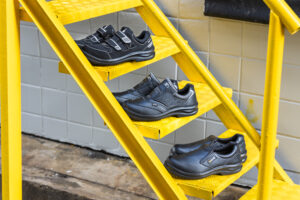
When selecting safety footwear, it is important to understand the difference between water-resistant and waterproof protection. Although both are designed to minimise water penetration, they are intended for different working environments.
Water-Resistant Safety Shoes
KPR safety shoes are designed with water-resistant uppers, helping to repel light water, oil, and everyday splashes commonly encountered in the workplace. The materials are engineered to reduce liquid penetration while maintaining breathability, flexibility, and all-day comfort. This makes water-resistant safety shoes ideal for industries where workers require protection without compromising comfort during long shifts.
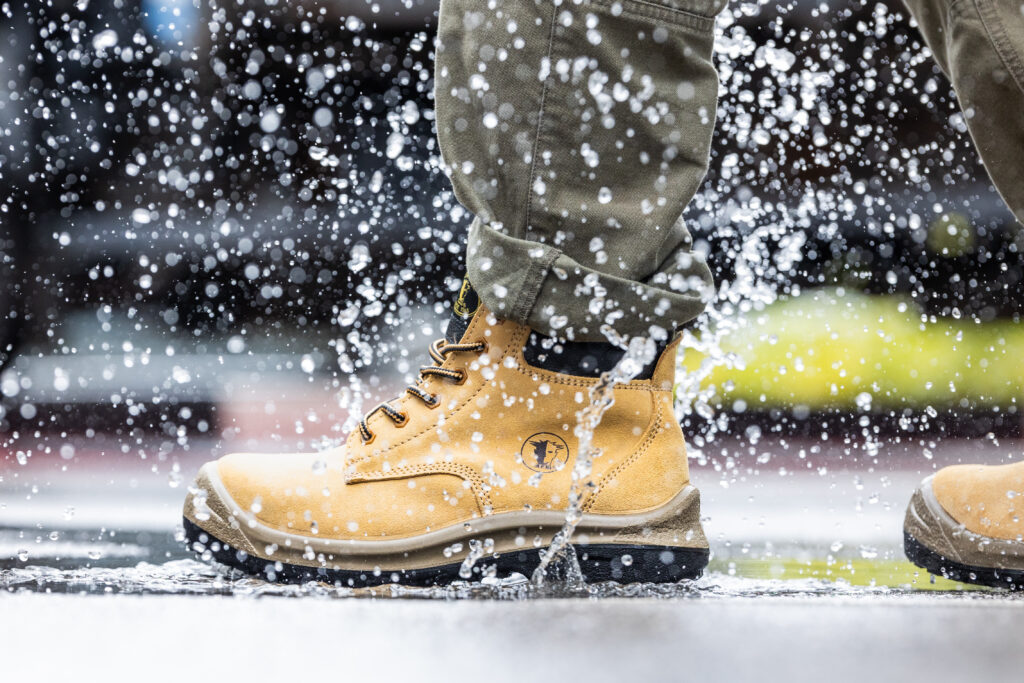
Waterproof Safety Boots
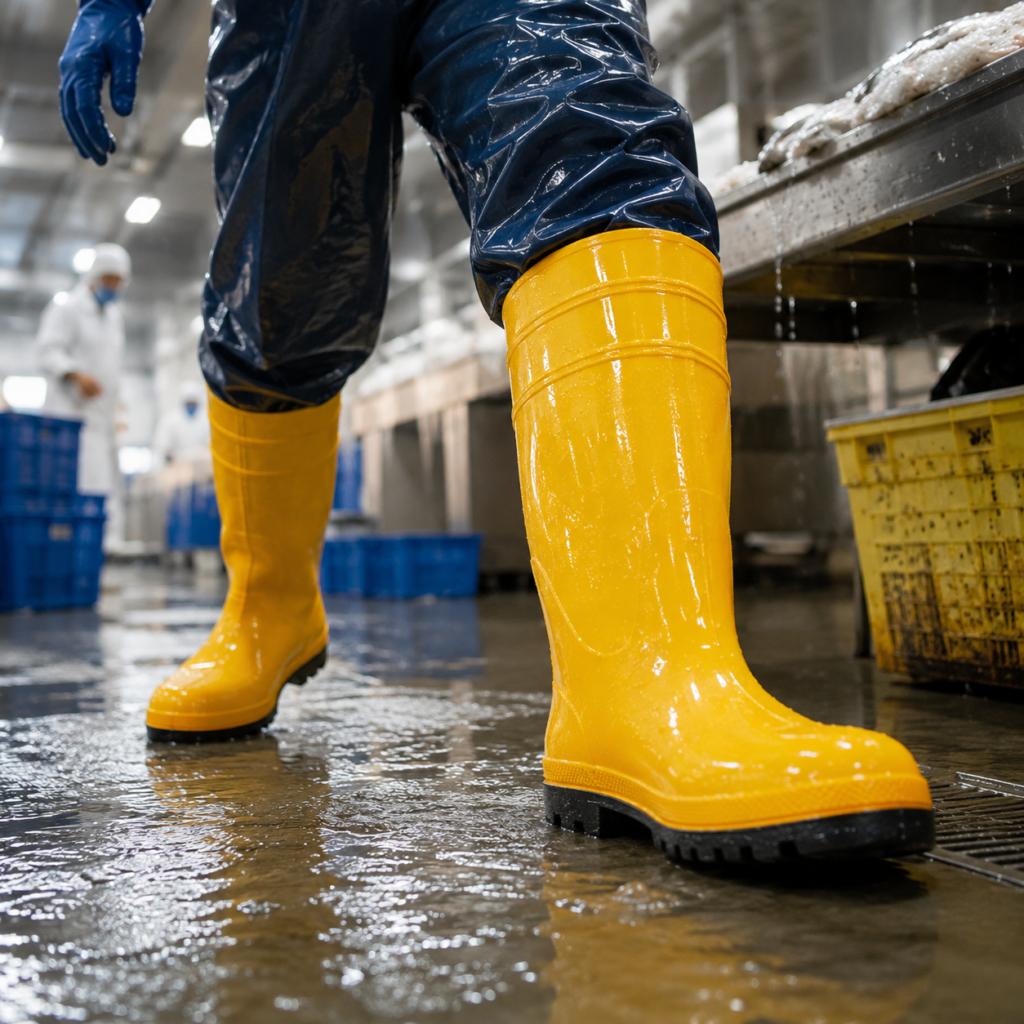
Waterproof safety boots, such as PVC yellow boots, are manufactured using fully sealed, non-porous materials that prevent water from entering, even during prolonged exposure. They are commonly used in environments involving standing water, heavy rain, flooding, or wet industrial applications where complete waterproof protection is essential. However, their sealed construction limits airflow, which may lead to increased heat and moisture build-up during extended wear.
Key Differences
Water-Resistant | Waterproof |
Resists light water, oil, and everyday splashes | Prevents water penetration during prolonged exposure |
Breathable and comfortable for extended wear | Fully sealed construction with limited airflow |
Lightweight and flexible | Heavier and designed for maximum water protection |
Suitable for general industrial and workplace use | Ideal for wet environments with continuous water exposure |
Choosing the appropriate footwear depends on your work environment. KPR water-resistant safety shoes provide the ideal balance of protection, comfort, and breathability for most workplaces, while PVC waterproof boots are recommended for applications requiring complete protection against prolonged water exposure.